
From Cost+ to Perceived Value: The Evolution of Industrial Spare Parts Pricing
Introduction
For decades, cost-plus pricing has been the dominant approach in industrial spare parts businesses. Simple, auditable and easy to explain, it provided organizations with a sense of control in complex environments.
However, as spare parts portfolios expanded, customer expectations evolved and competitive pressure increased, the limitations of cost-based pricing became increasingly visible.
The shift toward perceived value pricing did not happen overnight. It emerged progressively, as industrial organizations realized that pricing spare parts is not only about recovering costs, but about reflecting the value delivered to customers.
Understanding this evolution is essential to designing pricing strategies that are both effective and sustainable.
Why cost-plus pricing became the default
Cost-plus pricing fits naturally with industrial cultures.
Manufacturers are accustomed to understanding their products through bills of materials, production costs and overhead allocation. Applying a margin on top of a known cost base appears rational, objective and defensible.
In spare parts contexts, cost-plus pricing also offered operational simplicity: prices could be calculated systematically, governance was relatively straightforward, and decisions were easy to justify internally.
For a long time, this approach was sufficient — especially when spare parts catalogs were smaller, competition was limited and customers had few alternatives.
The structural limits of cost-plus in spare parts
As spare parts businesses grew, cracks began to appear.
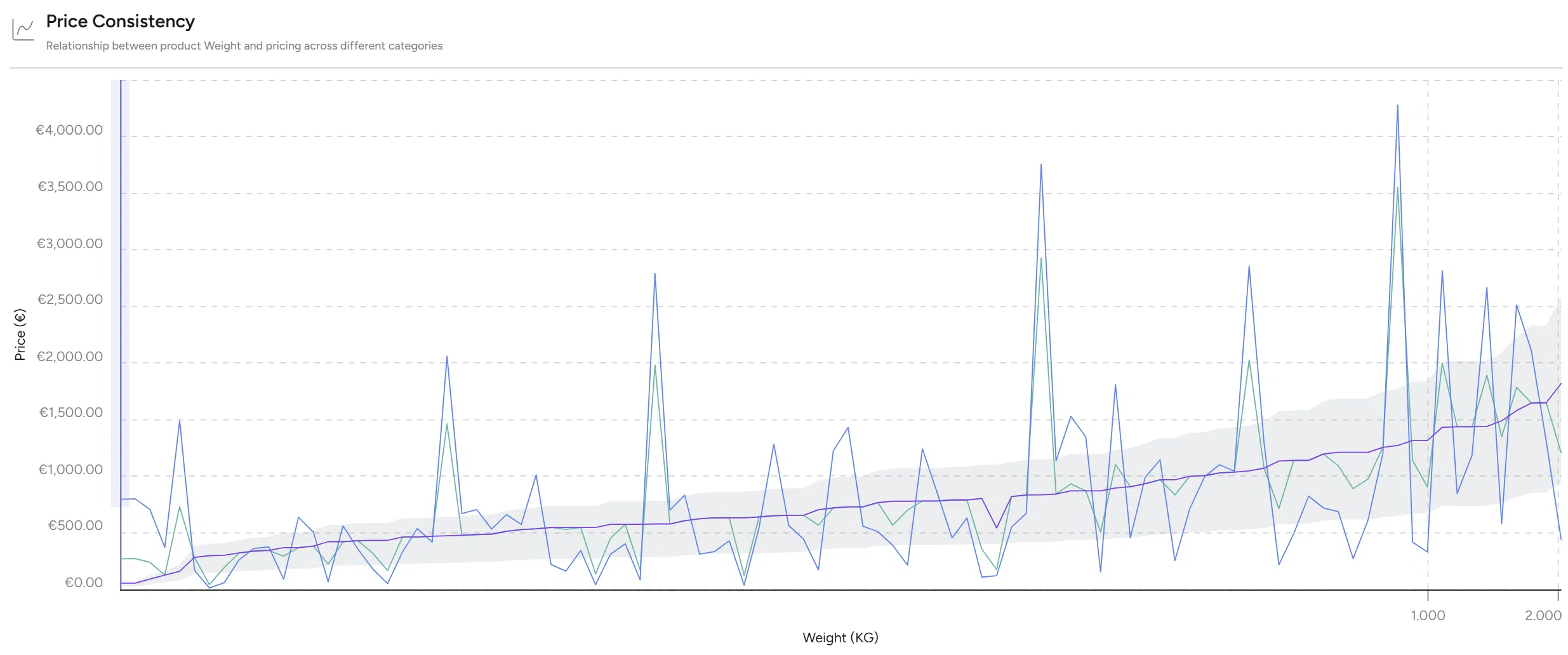
Cost-plus pricing assumes a stable relationship between cost and value. In reality, spare parts value is driven by very different factors: equipment criticality, downtime risk, availability constraints, switching costs, and customer dependency.
Two parts with similar production costs can have radically different perceived value for the customer. Conversely, parts with high costs may deliver limited value in certain contexts.
Cost-plus pricing fails to capture these nuances. Over time, this leads to systematic underpricing of high-value parts and overpricing of low-value ones — increasing both margin leakage and customer dissatisfaction.
Increasing complexity exposes inconsistencies
As catalogs expand into hundreds of thousands or millions of references, cost-plus pricing also struggles with scale.
Organizations introduce adjustments, exceptions and local corrections to compensate for its limitations. Margins are tweaked by region, customer type or part family. Discounts are layered on top of base prices.
Gradually, pricing logic becomes fragmented. Prices lose coherence across similar parts or customers, and explaining price differences becomes increasingly difficult.
At that stage, pricing teams spend more time managing exceptions than steering value.
The emergence of perceived value pricing
Perceived value pricing emerged as a response to these limitations.
Rather than anchoring prices to internal costs, it focuses on the value of the service delivered to the customer: the role of the part in the equipment, the consequences of failure or downtime, the availability of alternatives, and the customer’s operational context.
In theory, perceived value pricing aligns prices more closely with what customers are willing to pay, while better reflecting the economic importance of spare parts.
In practice, however, translating perceived value into operational pricing decisions is far from trivial.
Why perceived value pricing is difficult to industrialize
Perceived value is inherently multidimensional and context-dependent.
It cannot be captured through a single indicator or formula. It requires combining technical attributes, usage patterns, customer behavior and market conditions.
In industrial environments, this complexity is multiplied by scale. Applying perceived value logic to millions of references quickly exceeds the capacity of manual approaches or simple tools.
Without structure, perceived value pricing risks becoming subjective, inconsistent or overly dependent on individual judgment — undermining its credibility.
From concept to operational reality
The transition from cost-plus to perceived value pricing is not about abandoning structure. It is about redefining it.
Successful organizations formalize perceived value through: explicit value drivers, structured segmentation, consistent pricing methods, and controlled deployment mechanisms.
This allows perceived value to be translated into repeatable pricing logic rather than ad-hoc decisions.
Importantly, cost information does not disappear. It becomes one input among others, rather than the sole driver of pricing.
How LB&Partners supports this transition
LB&Partners supports industrial organizations in moving from cost-based to value-based pricing in a structured and pragmatic way.
The objective is not to impose a single pricing doctrine, but to: identify where perceived value pricing creates the most impact, define value drivers that reflect real customer situations, and integrate these drivers into scalable pricing architectures.
By combining pricing expertise with technology designed to handle large and complex catalogs, perceived value pricing becomes actionable rather than theoretical.
This approach enables organizations to capture additional value while maintaining coherence, governance and customer acceptance.
Toward a mature pricing model
The evolution from cost-plus to perceived value pricing reflects a broader maturation of industrial pricing practices.
As spare parts businesses become more strategic, pricing must move beyond cost recovery toward value management. This evolution requires clarity, structure and the ability to operate at scale.
Organizations that succeed are those that treat perceived value not as a slogan, but as an operational discipline — grounded in data, embedded in processes and supported by appropriate tools.
Conclusion
Cost-plus pricing has played an important role in the development of industrial spare parts businesses. But its limitations become increasingly apparent as complexity and scale grow.
Perceived value pricing offers a more accurate and strategic alternative, provided it can be industrialized and governed effectively. The challenge is not choosing between cost and value, but learning how to combine them within a coherent pricing framework that reflects both business reality and customer expectations.